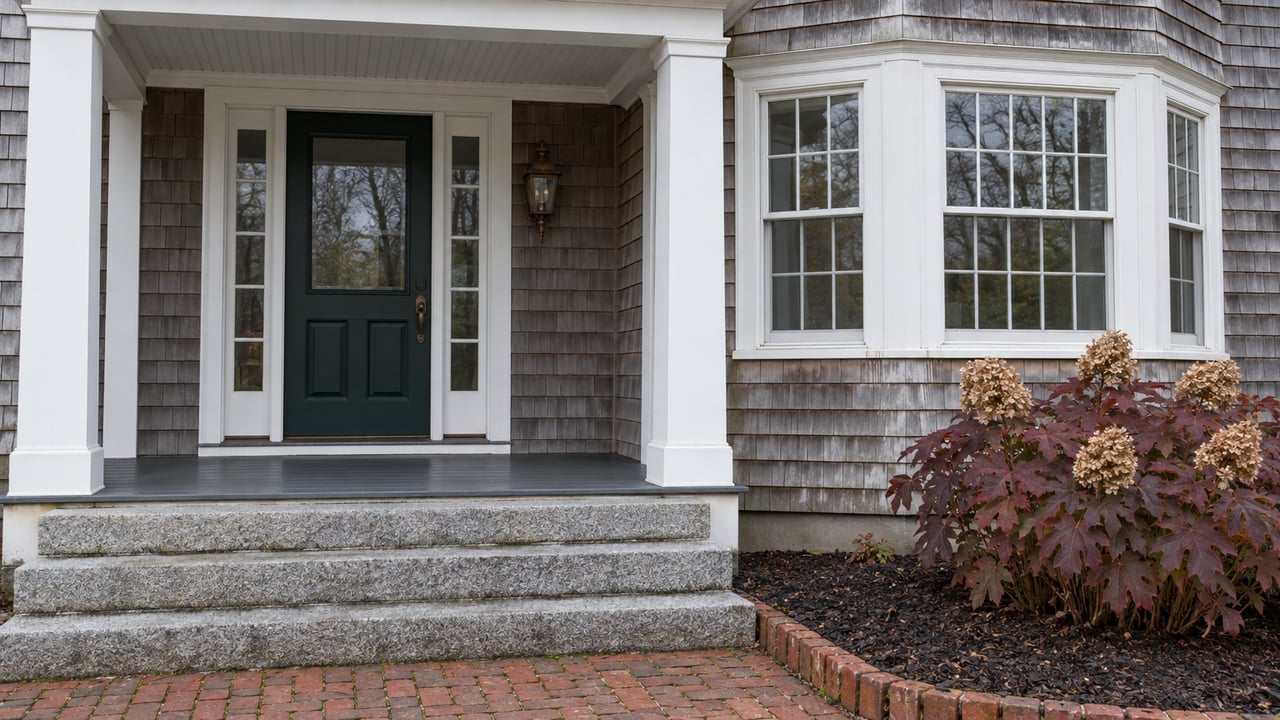
If a home sells before the state has mailed its next tax bill, who owes that bill? For a Providence house assessed above $1 million that the seller does not live in, Rhode Island answers by date. A closing on or before December 29 sends the open tax year to the buyer. A closing on December 30 or later sends it to the seller, who has to pay it before the deed changes hands.
The state's Non-Owner Occupied Property Tax is usually described by its rate. For anyone selling or buying this winter, the calendar matters more. It decides whether one extra year of tax moves with the house or stays with the person leaving it.
A Bill That Runs a Year Behind the Calendar
The tax is $2.50 for every $500 of assessed value above $1 million. It applies to residential property the owner does not occupy for at least 183 days in a year. The Rhode Island Division of Taxation administers it, mails the notices and collects the payments. Under the 2025 enacting law, the money goes to the state's low-income housing tax credit fund.
The lag is built into how each bill is calculated. Every tax year looks back to a "privilege year," the July-to-June period before it. Whether the owner lived there for 183 days is measured over that privilege year. The value comes from the city's assessment as of the December 31 before the privilege year began. The final regulation, 280-RICR-20-75-1, sets out the sequence:
| Assessed value as of | Privilege year | Tax year | Installments due |
|---|---|---|---|
| December 31, 2024 | July 1, 2025 to June 30, 2026 | July 1, 2026 to June 30, 2027 | Sept. 15 and Dec. 15, 2026; March 15 and June 15, 2027 |
| December 31, 2025 | July 1, 2026 to June 30, 2027 | July 1, 2027 to June 30, 2028 | Sept. 15 and Dec. 15, 2027; March 15 and June 15, 2028 |
| December 31, 2026 | July 1, 2027 to June 30, 2028 | July 1, 2028 to June 30, 2029 | Sept. 15 and Dec. 15, 2028; March 15 and June 15, 2029 |
This means the months an owner spends in the house right now, between July 2026 and June 2027, set a tax year that doesn't begin until July 1, 2027, with its first installment due September 15, 2027. Any home sold this winter carries an unbilled year with it, and the regulation decides who pays it.
The Line Between December 29 and December 30
For privilege years beginning July 1, 2026 or later, the regulation splits responsibility on a fixed date. The rule for a late-winter or spring closing reads:
"If the transfer date falls on December 30 through June 30, the responsibility for any tax due for the respective privilege year of the transfer is on the seller of the property, to the extent any tax is due."
When the transfer falls between July 1 and December 29, the buyer takes on the privilege year of the sale. The seller still owes the prior and current tax years. Here is how that applies to closings between this Thursday and next June:
| Closing date | Seller clears before closing | Passes to the buyer |
|---|---|---|
| Now through December 29, 2026 | Any tax still owed for the July 2026 to June 2027 tax year, and any earlier year | The July 2027 to June 2028 tax year, tied to the privilege year of the sale |
| December 30, 2026 through June 30, 2027 | The July 2026 to June 2027 tax year, plus the July 2027 to June 2028 tax year | The July 2028 to June 2029 tax year onward |
The regulation's own worked example uses a closing on May 22, 2027. In that case the seller "is responsible for any tax due for all applicable tax years through June 30, 2028" and "should pay any tax due in full, before the closing." That 2027 to 2028 tax year doesn't begin until July 1, 2027, and the Division sends its notices at the beginning of each tax year. A seller who closes in January pays it in advance, and a seller who closes before December 30 passes it to the buyer.
Passing the year to the buyer doesn't guarantee the buyer owes anything. The rule assigns "any tax due," and whether tax is due still depends on occupancy or an exemption. For the transition year, the regulation's example of a November sale says the buyer had to occupy the home for at least 183 days of the privilege year or qualify for an exemption. Otherwise the buyer owed the tax.
What the Split Looks Like on an East Side House
Take a hypothetical single-family house on the East Side. Say the city assessed it at $1.6 million as of December 31, 2024. The owner lives elsewhere and the house is not rented. Under the state formula, the $600,000 above the threshold produces $3,000 a year, or $750 a quarter. Assume the September 15, 2026 installment has been paid.
- Closing on December 18, 2026. The seller pays the rest of the current tax year before closing, which is the December, March and June installments, or $2,250. The 2027 to 2028 year goes to the buyer.
- Closing on January 8, 2027. The seller pays the same $2,250, plus the full 2027 to 2028 tax year. That year is figured from the December 31, 2025 assessment. If that assessment is still $1.6 million, the bill comes to as much as another $3,000. The final figure will be somewhat lower, because the $1 million threshold is indexed to inflation for tax years beginning July 1, 2027 and later.
Three weeks on the calendar moves up to about $3,000 from one side of the table to the other on this one house. On a house assessed at $3.2 million, the state's own chart puts the annual tax at $11,000, so the same three weeks could move up to that amount.
The state tax is charged on top of the city's own split rates. Providence's adopted FY2027 rates are $14.60 per $1,000 for non-owner-occupied single-family homes and $8.40 for owner-occupied single-family homes. For two- to five-family buildings the rates are $14.00 and $7.55. On the same hypothetical $1.6 million assessment, the city bill is $23,360 at the non-owner rate, compared with $13,440 for an owner-occupant. The state tax adds to the larger figure.
Sellers have one more closing cost that changed recently. According to the Division's 2025 summary of legislative changes, since October 1, 2025, Rhode Island's conveyance tax has been $3.75 per $500 on the full sale price. Residential sales pay another $3.75 per $500 on the portion above $800,000, a threshold indexed to inflation beginning January 1, 2026.
The Certificate Every Sale Above the Line Requires
Paying the tax isn't enough on its own. The closing also needs a document. Since July 1, 2026, Division Advisory ADV 2026-17 has required a Certificate of No Tax Due for "the sale or transfer of any residential property with an assessed value of more than $1 million."
That includes sellers who have lived in the house all year. The Division issues the certificate in one of three cases: the property was owner-occupied, the tax has been paid, or an exemption has been verified. A full-time resident on Blackstone Boulevard needs the certificate as much as an absentee owner does. The resident's request just shows occupancy instead of payment. The trigger is the assessed value, not the sale price. The Division's FAQ gives the example of a home bought for $500,000 but assessed at $1.3 million, and says that home is still subject to the tax.
The Division's August 2026 presentation to title insurers describes the process:
- The seller completes Form RI-6678, the Non-Owner Occupied Property Tax Certificate Request.
- The seller attaches the purchase and sale agreement.
- If an attorney or anyone other than the seller sends the request, a Rhode Island power of attorney, Form RI-2848, goes with it, signed by every owner.
- The package goes by email to [email protected] with the subject line "Certificate of No Tax Due – NOOPT," at least 10 business days before closing.
- Any tax due is paid in full by certified check, money order or escrow check, in person or by mail to the Division at One Capitol Hill.
The certificate is valid for 30 days after it's issued. When no tax is due and the paperwork is complete, the Division has issued certificates as quickly as the same day. The paperwork is where requests get stuck. From July 1 to August 6, 2026, the Division issued 46 certificates, and about half of the 21 requests still in progress were held up by power-of-attorney problems.
For a closing on Tuesday, December 29, counting back 10 business days and skipping Christmas Day puts the request deadline around Monday, December 14. That's one day before the December 15 installment comes due.
Why Providence's Assessments Keep This in Play
The state reported that 356 Providence properties met the criteria and expected about $1,845,733 a year from the city alone. That count could change as owners appeal, The Providence Eye reported in September 2026. Because the state did not disclose which houses are subject to the tax, the article asked where they might be. In it, Rhode Island Association of Realtors president Mike Pereira suggested likely places: high-rise condominiums downtown, Benefit Street, Blackstone Boulevard and President Avenue.
How long those properties stay above the threshold depends on the city's assessment schedule. Providence's current values are measured as of December 31, 2024. The Tax Assessor's FY2027 budget page says the next full revaluation will be measured as of December 31, 2027, for billing in 2028. Between those two dates, a house's assessment and its recent sale price can drift apart, and the assessment is the number that counts. Under the regulation, a December 31, 2027 value would first apply to the tax year that starts in July 2029.
Pereira's concern for the resale market was specific. "The next buyer is not going to want to come in and take on that tax burden," he told The Providence Eye, while adding that he had not heard many complaints from owners. The December 29 rule is where that concern turns into money. A buyer who closes before the line and doesn't plan to live in the house takes on the open year. A seller who closes after the line pays it.
Trusts, Multifamily Buildings and the Court Challenge
Does a house held in a trust count as owner-occupied? According to the Division's FAQ, a home held in trust isn't subject to the tax if the resident is authorized by the trust to live there, or if official documents establish that the resident lives there.
What about a two- or three-family building? The same FAQ says a multifamily property isn't subject to the tax as long as one unit is owner-occupied or qualifies for an exemption. The two exemptions are a written long-term lease for at least 183 days of the privilege year, and a short-term rental subject to sales tax that is rented for at least 183 days. Owner-occupied days and rented days can't be combined to reach 183.
Is the tax being challenged? More than 40 owners filed suit in Newport County Superior Court on August 19, 2026, seeking to void the tax and recover what has been paid, Uprise RI reported. As of Massachusetts Lawyers Weekly's September 23 report, the state had not yet responded in court. In the meantime, bills have gone out and installments are due on schedule.
This post is general information, not legal, tax or financial advice. Owners and buyers should confirm their own position with the Division of Taxation at [email protected] or 401-574-8955, and with their own attorney or CPA.
If you are preparing a Providence home assessed above $1 million for sale this winter, the closing date belongs in the plan from the first conversation, along with the certificate request and the power of attorney. Cherry Arnold works with sellers, trustees and their attorneys to set a closing calendar around the December 29 line and the certificate deadline. Schedule a private consultation to map out your timeline before mid-December.